The Peugeot 408 is a stylish car that combines the shape of a fastback with some features of an SUV. It has a raised body, a sloping roof, a modern cabin and a wide choice of engine options. As a result, it is worth considering if you want something different from a regular hatchback or saloon.
Peugeot offers the updated 408 with hybrid, plug-in hybrid and fully electric options in the UK. Therefore, buyers can choose a model that suits their budget, daily travel and access to charging.
However, choosing the right version requires more than looking at the design. Price, fuel use, boot space, comfort and running costs are also important.
In this guide, we will explore the Peugeot 408 price, specifications, features, performance, safety, interior and ownership costs. You will also learn about its main advantages and disadvantages before making a buying decision.
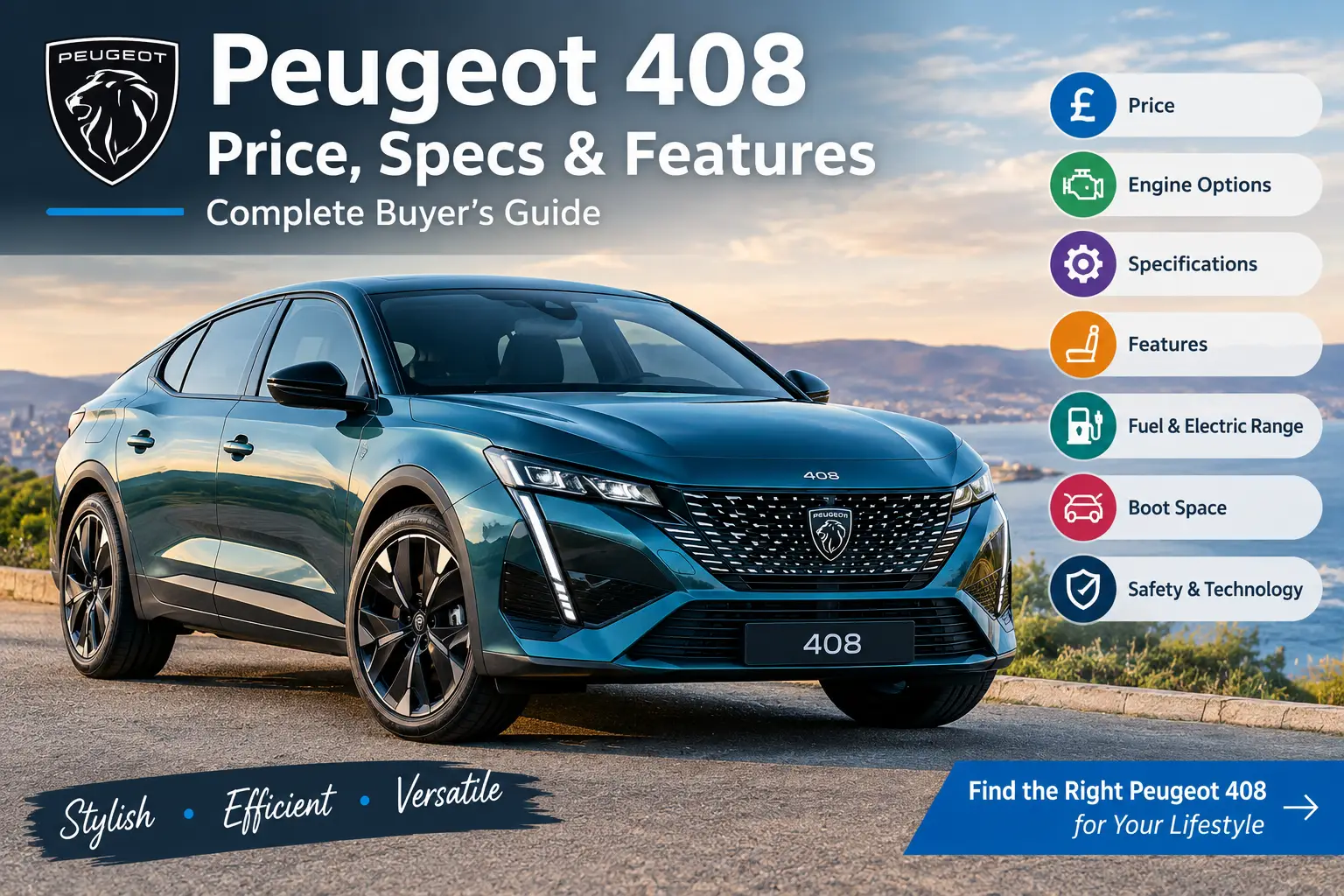
Peugeot 408 Price in 2026
The Peugeot 408 price depends on the country, engine, trim and local taxes. Dealer offers and government grants can also affect the final cost.
As a UK reference, the updated 408 has a starting list price of around £31,995. Current online offers may reduce the price. For example, Peugeot’s UK offers page has listed the Hybrid 145 from £30,495 on the road.
Example UK Prices
| Peugeot 408 version | Example UK price |
|---|---|
| 408 Hybrid 145 | From £31,995 list price |
| 408 Plug-in Hybrid 240 | From £38,495 list price |
| E-408 Electric | From £34,195 list price |
| E-408 after eligible £1,500 grant | From £32,695 |
These are UK prices, not worldwide prices. Offers may change, and the final amount can depend on the trim and dealer.
If you are buying outside the UK, check your local Peugeot website for the price in your currency. Taxes, import costs, equipment and available engines can differ from one market to another.
Peugeot 408 Specifications at a Glance
The latest Peugeot 408 offers three main engine choices in the UK. Each version has different strengths, so it helps to compare the main figures first.
| Specification | Peugeot 408 |
|---|---|
| Body style | Fastback crossover |
| Hybrid power | 145 hp |
| Plug-in hybrid power | Up to 240 hp model designation |
| Electric power | 210 hp |
| Hybrid gearbox | 6-speed automatic |
| Plug-in hybrid gearbox | 7-speed automatic |
| Electric range | Up to 283 miles WLTP |
| PHEV electric range | Up to 50 miles WLTP combined |
| Boot space | Up to 536 litres |
| Maximum boot space | Up to 1,611 litres with rear seats folded |
Figures depend on the engine, trim and testing method. Therefore, check the exact specifications of the vehicle available in your country before ordering.
Peugeot 408 Engine Options
One of the main strengths of the 408 is its choice of engines. Instead of offering just one setup, Peugeot gives buyers hybrid, plug-in hybrid and electric versions.
As a result, you can choose the model that fits your daily driving habits.
Peugeot 408 Hybrid 145
The Hybrid 145 combines a 1.2-litre petrol engine with a small electric motor. Together, the system produces around 145 hp and uses a six-speed automatic gearbox.
Unlike a plug-in hybrid, this version does not need to be connected to a charger. Its battery recovers energy while the car slows down and brakes.
Peugeot quotes fuel economy of up to 56.5 mpg under WLTP testing. Actual fuel use will depend on traffic, weather, speed and driving style.
Who should choose it?
The Hybrid 145 may suit drivers who want an automatic car with better fuel economy but do not have a home charger. It is also worth considering for everyday city driving and regular trips between towns.
Peugeot 408 Plug-in Hybrid 240
The Plug-in Hybrid 240 combines a 1.6-litre petrol engine with an electric motor. The system has a combined output of around 240 hp, depending on how the power is reported.
It can travel using electric power for short journeys when the battery is charged. Peugeot lists an electric range of up to around 50 miles under the WLTP combined test, with a higher figure possible in suitable urban conditions.
For example, drivers with a short daily commute may complete much of their local travel without using petrol, provided they charge regularly.
However, charging habits matter. If you rarely charge the battery, you may not get the full benefit of the plug-in hybrid system.
Peugeot E-408 Electric
The E-408 is the fully electric version. It uses a 210 hp electric motor and a battery with around 58 kWh of usable capacity. Peugeot quotes an electric range of up to 283 miles under WLTP testing.
The car supports DC rapid charging at up to 120 kW. Under suitable conditions, charging from 20% to 80% can take around 30 minutes.
Electric driving can be quiet and smooth. In addition, home charging may cost less per mile than petrol, depending on local electricity prices.
Still, the real-world range can be lower in cold weather, at high speeds or when using heating and air conditioning. Therefore, consider your normal travel distance before choosing an electric car.
Peugeot 408 Exterior Design
The Peugeot 408 stands out because it does not look like a typical family car.
Its sloping roof gives it a fastback shape, while the raised body and strong wheel arches add an SUV-like look. Meanwhile, the updated front design features a new lighting style and an illuminated Peugeot badge on selected trims.
The newer model also introduces Flare Green paint, along with other colour choices such as white, grey, black and red. Wheel designs vary by trim, with larger alloy wheels available on higher versions.
For buyers who want a car that looks modern and different, the 408 is an appealing option.
Peugeot 408 Interior and Comfort
Inside, the Peugeot 408 focuses on comfort, technology and a modern design.
The cabin uses Peugeot’s i-Cockpit layout, with a digital display in front of the driver and a central touchscreen for many controls. The latest range includes a 10-inch digital instrument panel and a 10-inch HD touchscreen. Wireless Apple CarPlay and Android Auto are also available.
Higher trims offer extra features. Depending on the version, these can include upgraded seat materials, a 3D digital display, heated front seats, massage functions and electric seat adjustment.
However, the driving position may not suit everyone. The small steering wheel and raised display are part of Peugeot’s design, so take a test drive before buying.
Make sure you can see the instruments clearly and find a comfortable position behind the wheel.
Peugeot 408 Boot Space and Practicality
The 408 offers useful space for daily travel, shopping and family trips.
Peugeot lists up to 536 litres of boot space with the rear seats in place. Folding the rear seats increases the available space to around 1,611 litres.
This gives the car an advantage over some smaller hatchbacks. For example, the boot can hold suitcases, shopping bags and other everyday items.
Nevertheless, it is important to check the exact car before buying. Boot space can vary by version, and the sloping roof may affect how easily you can load taller items.
If you regularly carry large luggage, take your usual bags to the dealership and see how well they fit.
Peugeot 408 Technology and Features
Modern technology is another reason to consider the 408.
Depending on the trim, the car can offer:
- 10-inch touchscreen
- Digital driver display
- Wireless Apple CarPlay
- Wireless Android Auto
- Connected navigation
- Adaptive cruise control
- Rear parking sensors
- HD reversing camera
- Electric tailgate
- Matrix LED headlights
- 360-degree camera
- Premium sound system
Higher trims usually include more equipment. For example, GT versions add features such as Matrix LED headlights, while GT Premium can include massage seats and a 360-degree camera system.
Therefore, compare the equipment lists before paying more for a higher trim. The best value is the version that includes the features you will actually use.
Peugeot 408 Safety Features
Safety should always be part of your buying decision.
Depending on the trim, the Peugeot 408 can include adaptive cruise control, lane assistance, blind-spot alerts and rear cross-traffic warnings. Parking cameras and sensors can also make tight spaces easier to manage.
These systems can help reduce the effort of daily driving. However, they do not replace careful driving or regular checks around the vehicle.
Equipment can also vary between countries. For this reason, confirm which safety features are fitted to the exact model you are considering.
Peugeot 408 Driving Experience
The Peugeot 408 aims to combine everyday comfort with a confident road feel.
Its raised body gives the driver a more elevated view than a traditional saloon. At the same time, the fastback shape keeps the car looking lower and sportier than many SUVs.
The Hybrid 145 is a sensible choice for routine travel. Meanwhile, the plug-in hybrid offers more power and the ability to cover some trips using electric power.
The E-408 provides a different experience because it drives without a petrol engine. Electric power gives quick response when you press the accelerator, while the quiet motor makes slow-speed travel more relaxed.
Ultimately, the best version depends on how you use the car. Test drive your preferred engine before making a final choice.
Peugeot 408 Running Costs
The total cost of owning a car includes more than its purchase price.
Fuel or electricity, insurance, servicing, tyres and repairs can all affect your budget. Therefore, compare these costs before deciding which version offers the best value.
The Hybrid 145 may suit drivers who want to reduce fuel use without changing their charging habits. By contrast, the plug-in hybrid can be more attractive if you can charge often and use electric power for short trips.
For the E-408, home charging may help lower the cost per mile. However, public rapid charging can cost more, so your charging routine makes a difference.
It is also wise to compare warranty terms and service costs in your country before buying.
Peugeot 408 Pros and Cons
Advantages
- Bold and modern exterior design
- Choice of hybrid, plug-in hybrid and electric versions
- Comfortable cabin
- Large boot for everyday needs
- Modern touchscreen and digital displays
- Useful driver assistance features
- Automatic transmission options
- Electric version available
Disadvantages
- Higher trims can cost more
- The driving position may not suit every driver
- Real-world electric range can vary
- Plug-in hybrid savings depend on regular charging
- The sloping roof may limit the loading of tall items
- Prices and equipment vary by country
Peugeot 408 vs Other Cars
The Peugeot 408 sits between a regular family car and an SUV. As a result, buyers may also compare it with the Peugeot 3008, Peugeot 308 and other crossover-style cars.
The Peugeot 308 is smaller and has a more traditional hatchback shape. Meanwhile, the Peugeot 3008 has a more SUV-like design and may appeal to buyers who prefer that body style.
Other brands also offer family cars with hybrid or electric options. When comparing them, look at the price, cabin space, boot size, warranty and running costs rather than focusing only on appearance.
The 408 is worth a closer look if you want a distinctive design without choosing a large SUV.
Is the Peugeot 408 Worth Buying?
For many drivers, the Peugeot 408 is worth considering.
Its main strengths are its bold styling, useful boot space, modern cabin and choice of engines. In addition, the electric version gives buyers a way to move away from petrol without choosing a smaller car.
The Hybrid 145 may be the easiest choice for people who do not want to plug in. On the other hand, the plug-in hybrid suits drivers who can charge regularly, while the E-408 may be best for people with convenient charging access.
Before deciding, compare the full price and equipment in your market. Also, take a test drive and check whether the driving position, rear space and boot meet your needs.
Final Verdict
The Peugeot 408 is a stylish family car for buyers who want something different from a standard hatchback or SUV.
It offers a modern interior, useful technology and several engine options. Furthermore, its large boot and comfortable layout make it suitable for everyday use and longer trips.
The right model depends on your needs. Choose the Hybrid 145 for simple everyday use, consider the plug-in hybrid if you can charge often, or look at the E-408 if you want a fully electric car.
Above all, check local prices, warranty terms and equipment before buying. That way, you can choose the Peugeot 408 that best fits your budget and driving habits.
10 Frequently Asked Questions About the Peugeot 408
1. What is the Peugeot 408 price in 2026?
The price depends on the country, engine and trim. In the UK, the updated range has a list price from around £31,995, while current offers may be lower.
2. What engine options does the Peugeot 408 offer?
The updated UK range includes a 145 hp hybrid, a plug-in hybrid marketed as the 240 version, and the fully electric E-408. Availability can differ in other countries.
3. What is the electric range of the Peugeot E-408?
Peugeot quotes up to 283 miles of range under WLTP testing. Actual range depends on weather, speed, road conditions and the use of heating or air conditioning.
4. How much boot space does the Peugeot 408 have?
The 408 offers up to 536 litres with the rear seats in place and around 1,611 litres with them folded. Exact capacity may vary by version.
5. Is the Peugeot 408 a hybrid car?
Yes. The 408 Hybrid 145 combines a petrol engine with electric assistance. It recharges its small battery while driving and does not need an external charger.
6. Can the Peugeot 408 Plug-in Hybrid drive on electricity alone?
Yes. The plug-in hybrid can use electric power for short trips when the battery is charged. Its electric range depends on the model and driving conditions.
7. Does the Peugeot 408 have an automatic gearbox?
Yes. The Hybrid 145 uses a six-speed automatic gearbox, while the plug-in hybrid uses a seven-speed automatic gearbox.
8. Is the Peugeot 408 good for families?
It can be a good choice for families because it offers a spacious boot, a modern cabin and useful safety features. However, you should check rear-seat comfort and child-seat access before buying.
9. Is the Peugeot E-408 expensive to run?
It may cost less per mile than a petrol car if you can charge at home at a good electricity rate. Still, actual costs depend on local prices, mileage and charging habits.
10. Which Peugeot 408 version should I buy?
The Hybrid 145 suits buyers who want simple ownership without charging. The plug-in hybrid is better for people who can charge regularly, while the E-408 suits drivers ready for a fully electric car.