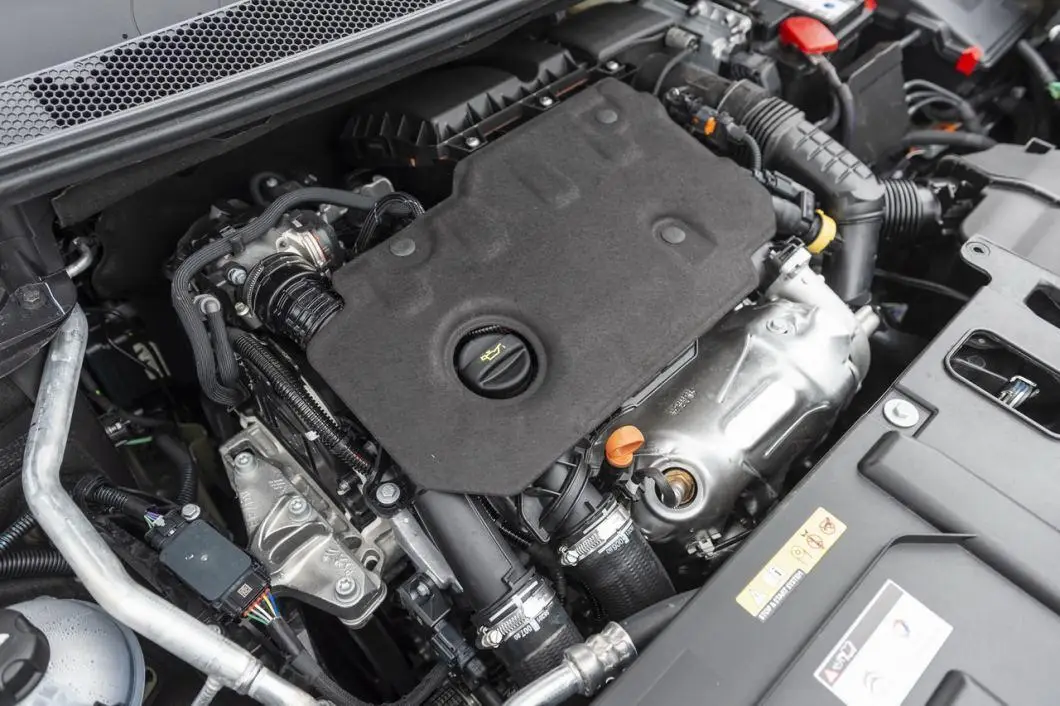
The Peugeot 1.5 BlueHDi diesel engine is known for its fuel efficiency, strong torque and suitability for long-distance driving. However, Peugeot 1.5 BlueHDi engine problems have become an important concern for owners and used-car buyers, particularly because of premature camshaft timing-chain wear affecting certain earlier engines.
Introduced in 2017, the 1.5 BlueHDi engine has been fitted to several Peugeot models, including the 208, 308, 3008, 5008 and Rifter. Although many examples provide economical everyday motoring, some engines have experienced mechanical and emissions-related problems.
The most significant concern is the camshaft chain issue, which can cause unusual engine noises and, in severe cases, engine damage. Furthermore, diesel emissions components such as the AdBlue system, Diesel Particulate Filter (DPF) and Exhaust Gas Recirculation (EGR) system can require attention.
In this guide, we explain the most common Peugeot 1.5 BlueHDi engine problems, their symptoms, potential repair solutions and what buyers should check before purchasing a used Peugeot diesel.
1. Peugeot 1.5 BlueHDi Timing Chain Problems
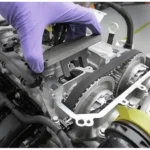
The camshaft timing-chain issue is one of the most important Peugeot 1.5 BlueHDi engine problems to understand.
Certain earlier generations of the 1.5 BlueHDi engine can experience premature wear of the camshaft chain. Peugeot has acknowledged this concern and introduced recall and customer-support measures for affected vehicles.
The problem primarily concerns previous-generation engines produced between October 2017 and January 2023.
Why Does the Peugeot 1.5 BlueHDi Timing Chain Wear?
According to Peugeot, oil quality plays an important role in premature chain wear.
Over time, soot can accumulate in the engine oil. This contamination can act as an abrasive, increasing wear on the camshaft chain.
Consequently, inadequate maintenance, incorrect oil specifications or delayed oil changes can increase the risk of problems.
Common Timing Chain Failure Symptoms
Watch for the following warning signs:
- Unusual rattling noises from the engine.
- Metallic noises during cold starts.
- Engine vibration.
- Unusual sounds from the upper engine area.
- Reduced engine performance.
- Difficulty starting in some cases.
Importantly, a timing-chain problem may not always produce an obvious dashboard warning.
If you notice unusual engine noise or vibration, arrange a professional inspection. Do not continue driving if you suspect serious chain damage.
How Can You Fix the Timing Chain Problem?
The appropriate repair depends on the vehicle’s condition and the results of a professional inspection.
Possible interventions include:
- Diagnostic inspection of the camshaft chain.
- Manufacturer-recommended software updates.
- An oil change using the approved specification.
- Replacement of the timing chain where necessary.
Peugeot has introduced a recall programme for affected vehicles, with inspections and repairs being arranged in stages.
Therefore, check your vehicle identification number (VIN) with Peugeot rather than assuming your vehicle is unaffected.
2. Peugeot 1.5 BlueHDi Engine Warning Light Problems
An engine warning light can indicate several different problems in a Peugeot 1.5 BlueHDi.
For example, the warning may relate to the fuel injection system, emissions equipment, sensors or another engine-management component.
However, the warning light alone cannot identify the exact fault.
Common Symptoms
You may notice:
- Amber engine management warning light.
- Reduced engine power.
- Poor acceleration.
- Increased fuel consumption.
- Engine hesitation.
- Warning messages on the instrument panel.
In some cases, the vehicle may enter limp mode to protect the engine or emissions system.
Possible Solutions
First, have the vehicle scanned using suitable diagnostic equipment.
The fault codes can help identify whether the problem involves the engine management system, emissions equipment or another component.
Avoid replacing sensors or other expensive parts without confirming the underlying cause.
If the STOP warning appears, or the engine develops severe knocking, overheating or significant power loss, stop safely and seek professional assistance.
3. Peugeot 1.5 BlueHDi AdBlue Problems
AdBlue system problems are another concern for owners of diesel Peugeot vehicles equipped with Selective Catalytic Reduction (SCR) technology.
The AdBlue system helps reduce nitrogen oxide (NOx) emissions from diesel exhaust gases.
However, components such as the AdBlue tank, pump, injector and sensors can develop faults.
Common AdBlue Problem Symptoms
Look out for:
- AdBlue warning messages.
- Engine emissions fault warnings.
- A remaining-distance countdown.
- Engine management warning lights.
- Failure of the warning to disappear after refilling.
In some situations, the vehicle may display a message indicating that it will not restart after a specified distance.
Why Do AdBlue Problems Occur?
Potential causes include:
- Faulty AdBlue level sensors.
- Pump-related problems.
- AdBlue injector faults.
- Crystallisation around components.
- Electrical or wiring problems.
- Other SCR system malfunctions.
How Can You Fix AdBlue Problems?
Start by checking the AdBlue level and following the manufacturer’s instructions for refilling.
If the warning remains, arrange a diagnostic inspection.
A technician should check the tank, pump, injector, sensors and electrical connections before recommending replacement parts.
Repeatedly adding AdBlue will not solve a faulty pump or sensor.
4. Peugeot 1.5 BlueHDi DPF Problems
The Diesel Particulate Filter (DPF) collects soot from diesel exhaust gases and reduces harmful emissions.
Although the system is designed to clean itself through a process called regeneration, problems can develop when the vehicle is mainly used for short journeys.
During regeneration, exhaust temperatures increase to burn off accumulated soot.
However, frequent short trips may prevent the process from completing successfully.
Common DPF Symptoms
- DPF warning light.
- Reduced engine performance.
- Increased fuel consumption.
- Engine management warnings.
- Cooling fan running after a journey.
- More frequent regeneration attempts.
How Can You Prevent DPF Problems?
If a DPF warning appears, consult the vehicle handbook for the correct instructions.
Where appropriate, a suitable longer journey may help the vehicle complete regeneration. However, this should only be attempted when the handbook permits it and there are no serious warning signs.
If the warning continues, a professional should inspect the DPF and related sensors.
Do not ignore persistent DPF warnings because continued operation with a heavily blocked filter can lead to additional problems.
5. Peugeot 1.5 BlueHDi EGR Valve Problems
The Exhaust Gas Recirculation (EGR) system helps reduce nitrogen oxide emissions by directing some exhaust gases back into the engine.
Over time, soot and carbon deposits can accumulate inside the EGR system.
This may affect the valve’s operation and cause engine-performance problems.
Common EGR Fault Symptoms
- Rough engine idling.
- Reduced acceleration.
- Engine warning light.
- Poor fuel economy.
- Hesitation during acceleration.
- Increased exhaust emissions.
What Is the Solution?
A technician should inspect the EGR valve and associated components.
Depending on the condition, cleaning or replacing the affected component may be necessary.
However, the same symptoms can be caused by other engine or emissions faults. Therefore, proper diagnosis is important before spending money on repairs.
6. Peugeot 1.5 BlueHDi Fuel Injector Problems
Fuel injectors deliver diesel into the engine at precisely controlled pressures and timings.
If an injector becomes damaged, contaminated or blocked, the engine may not operate smoothly.
Although injector problems are not the defining fault of every 1.5 BlueHDi engine, they are worth considering when investigating poor running.
Common Symptoms
- Difficult cold starting.
- Rough engine operation.
- Increased fuel consumption.
- Engine hesitation.
- Excessive smoke.
- Unusual engine knocking.
How Can You Fix Injector Problems?
A specialist can carry out diagnostic checks and injector testing.
Depending on the results, cleaning, repair or replacement may be required.
It is also important to investigate fuel quality and the condition of the fuel filter.
Avoid assuming that every starting or acceleration problem is caused by faulty injectors.
7. Peugeot 1.5 BlueHDi Turbocharger Problems
The turbocharger helps improve engine performance by increasing the amount of air supplied to the engine.
Although the turbocharger is designed for long-term use, problems can develop through component wear, lubrication issues or related mechanical faults.
Common Turbocharger Symptoms
- Loss of engine power.
- Unusual whistling noises.
- Excessive exhaust smoke.
- Poor acceleration.
- Increased oil consumption.
- Engine warning messages.
Possible Solutions
A professional inspection should include the turbocharger, associated oil pipes, air hoses and boost-control components.
If the turbocharger has failed, repair or replacement may be required.
Regular oil changes using the correct manufacturer-approved specification are important for protecting turbocharger components.
8. Peugeot 1.5 BlueHDi Starting Problems
Some Peugeot diesel owners may experience difficulty starting, particularly during colder weather or after the vehicle has been left unused.
However, starting problems can have several different causes.
Possible reasons include:
- Weak battery.
- Faulty glow plugs.
- Fuel delivery problems.
- Fuel pressure issues.
- Sensor faults.
- Electrical connection problems.
A technician should check the battery, starting system, fuel supply and diagnostic fault codes.
If the engine struggles to start repeatedly, investigate the issue rather than relying on repeated starting attempts.
Which Peugeot Models Use the 1.5 BlueHDi Engine?
Peugeot has used the 1.5 BlueHDi diesel engine in several passenger and commercial vehicles.
Depending on the market, model year and specification, these include:
| Peugeot model | Vehicle type |
|---|---|
| Peugeot 208 | Small hatchback |
| Peugeot 308 | Family hatchback |
| Peugeot 308 SW | Estate |
| Peugeot 3008 | Family SUV |
| Peugeot 5008 | Seven-seat SUV |
| Peugeot Rifter | Multi-purpose vehicle |
| Peugeot Partner | Light commercial vehicle |
Not every model year or engine version has the same mechanical specification.
Therefore, confirm the engine code, production date and vehicle identification number before applying information about a particular fault.
Which Peugeot 1.5 BlueHDi Engines Are Affected by the Timing Chain Issue?
Peugeot and Stellantis have identified premature camshaft-chain wear in certain previous-generation 1.5 BlueHDi engines.
The relevant production period for the special coverage policy is October 2017 to January 2023.
Peugeot’s UK information also identifies certain 2017–2023 vehicles as potentially affected by the recall.
However, this does not mean every vehicle manufactured during this period has a defective chain.
The recall is being handled in stages, so an eligible vehicle may not immediately display an active campaign.
The best approach is to check the VIN through Peugeot’s official recall system and contact an authorised retailer.
Peugeot 1.5 BlueHDi Warranty Extension and Recall Support
One important development for affected owners is Stellantis’ extended customer-support policy.
In July 2025, Stellantis announced special coverage for eligible previous-generation 1.5 BlueHDi engines.
The UK customer-support policy provides:
- Up to 10 years of coverage.
- Up to 150,000 miles.
- 100% coverage of eligible parts and labour costs.
- Support for qualifying camshaft-chain problems.
- A process for applying for reimbursement for certain previous repairs.
However, this coverage is subject to eligibility conditions.
For example, maintenance must follow the manufacturer’s recommendations, including the required oil specification.
Owners who previously paid for eligible camshaft-chain repairs between 1 January 2023 and 30 June 2025 may also qualify for reimbursement, subject to the applicable conditions.
You can find the details here:
Official Peugeot 1.5 BlueHDi information:
https://www.peugeot.co.uk/owners/Peugeot-1-5-blue-hdi-key-information.html
Peugeot customer-support platform:
https://www.peugeot.co.uk/owners/customer-support-1-5-blue-hdi-diesel-engines.html
Peugeot vehicle recall checker:
https://www.peugeot.co.uk/tools/recall-campaigns.html
Importantly, the extended support is not an unconditional warranty for every Peugeot diesel vehicle. Always confirm your eligibility directly with Peugeot.
How to Maintain a Peugeot 1.5 BlueHDi Engine
Regular maintenance is essential for keeping a diesel engine in good condition.
If you own a Peugeot 1.5 BlueHDi, follow these practical recommendations.
1. Follow the Correct Oil Change Schedule
Use the engine oil specification approved for your exact vehicle.
Oil quality is particularly important because Peugeot has linked soot contamination with premature camshaft-chain wear.
2. Keep Your Service Records
Maintain invoices, service documents and evidence of oil changes.
These records can also be important when checking eligibility for Peugeot’s customer-support policy.
3. Avoid Ignoring Engine Noises
Unusual rattling, vibration or metallic noises should be investigated promptly.
This is especially important for vehicles within the potentially affected production range.
4. Pay Attention to DPF Warnings
Avoid repeatedly ignoring DPF warnings.
Follow the vehicle handbook and arrange professional diagnosis if the warning persists.
5. Check AdBlue Warnings
Use the correct AdBlue fluid and investigate persistent warnings rather than repeatedly refilling the tank.
6. Arrange Regular Vehicle Inspections
Have the engine, fuel system, emissions equipment, cooling system and associated components checked according to the manufacturer’s maintenance schedule.
For additional maintenance information, read our guide to Peugeot Service Cost and Maintenance.
What to Check Before Buying a Used Peugeot 1.5 BlueHDi
A used Peugeot with the 1.5 BlueHDi engine can still be a sensible purchase, particularly for drivers who regularly cover longer distances.
However, you should carry out several checks before agreeing to buy.
Use this checklist:
- Confirm the exact engine and production date.
- Check the complete service history.
- Ask for evidence of regular oil changes.
- Confirm the correct oil specification was used.
- Check the VIN for outstanding recall campaigns.
- Ask whether the camshaft chain has been inspected.
- Check for unusual engine noises during a cold start.
- Inspect the AdBlue system for warning messages.
- Check for DPF and EGR-related faults.
- Test the vehicle’s acceleration and general performance.
- Arrange an independent mechanical inspection.
Furthermore, do not rely solely on a seller’s statement that the vehicle has been maintained properly.
Ask for supporting invoices and documentation.
If the car falls within the relevant production period, contact Peugeot to establish whether the recall or extended customer support applies.
Is the Peugeot 1.5 BlueHDi Engine Reliable?
The Peugeot 1.5 BlueHDi engine has several advantages, including good fuel economy, useful torque and suitability for motorway driving.
Nevertheless, the premature camshaft-chain wear issue affecting certain earlier engines is a significant consideration.
In addition, diesel emissions components such as the DPF, AdBlue and EGR systems can require maintenance or repair as the vehicle ages.
This does not mean every 1.5 BlueHDi engine will develop these problems.
A vehicle with a complete service history, correct oil maintenance and documented recall work may be a more attractive purchase than an example with an unknown maintenance background.
Ultimately, the engine’s production date, condition and repair history should influence your buying decision.
Final Verdict: Should You Avoid the Peugeot 1.5 BlueHDi?
The Peugeot 1.5 BlueHDi is not an engine that every buyer needs to avoid. However, its known camshaft-chain concern deserves serious attention.
The most important step is to establish whether the vehicle falls within the affected production range and whether any recall or customer-support work is outstanding.
Also, pay attention to AdBlue, DPF, EGR and fuel-system warnings.
If you already own one, maintain it according to Peugeot’s recommendations and investigate unusual engine noises immediately.
If you are considering a used example, check its VIN, service history and repair documentation before purchasing.
With the right maintenance and a properly inspected vehicle, the Peugeot 1.5 BlueHDi can remain a practical diesel option for drivers who need an economical car for regular longer journeys.
Frequently Asked Questions About Peugeot 1.5 BlueHDi Engine Problems
1. What are the most common Peugeot 1.5 BlueHDi engine problems?
The most significant known issue is premature camshaft timing-chain wear in certain earlier engines. Other potential problems include AdBlue system faults, DPF blockage, EGR issues, fuel injector faults and turbocharger problems.
2. Which years of Peugeot 1.5 BlueHDi engines have chain problems?
The special coverage policy concerns previous-generation engines produced between October 2017 and January 2023. However, not every vehicle from this period is affected. Check your VIN with Peugeot.
3. Is the Peugeot 1.5 BlueHDi timing chain covered by warranty?
Eligible vehicles may receive 100% coverage of parts and labour for qualifying camshaft-chain problems for up to 10 years or 150,000 miles. Specific maintenance and eligibility conditions apply.
4. What are the symptoms of a Peugeot 1.5 BlueHDi timing chain problem?
Common warning signs include unusual rattling, metallic engine noises, vibration and, in some cases, reduced performance or starting difficulties. Have unusual noises investigated promptly.
5. Can a Peugeot 1.5 BlueHDi timing chain break?
Yes. Peugeot acknowledges that premature chain wear can, in rare cases, lead to chain breakage during starting or driving. This can cause serious engine damage.
6. Is the Peugeot 1.5 BlueHDi engine reliable after 2023?
Later production engines should not automatically be assumed to have the same earlier chain issue. However, reliability depends on the exact engine version, maintenance and vehicle condition. Check the VIN and production details.
7. Why does my Peugeot 1.5 BlueHDi show an AdBlue warning?
The warning may indicate low AdBlue fluid or a fault involving the tank, pump, injector, sensor or SCR emissions system. If refilling does not clear the warning, arrange a diagnostic inspection.
8. How can I prevent Peugeot 1.5 BlueHDi engine problems?
Follow the correct servicing schedule, use manufacturer-approved engine oil, maintain the AdBlue system, investigate warning lights and arrange regular inspections. Keep all maintenance invoices.
9. Is the Peugeot 1.5 BlueHDi suitable for long-distance driving?
Yes. Its diesel design and fuel efficiency make it suitable for drivers who regularly cover longer distances. However, check the service history and relevant mechanical issues before buying.
10. Should I buy a used Peugeot 1.5 BlueHDi?
It can be worth considering if the vehicle has a complete service history, no unresolved mechanical problems and documented recall checks. Pay particular attention to the camshaft chain and emissions systems before purchasing.