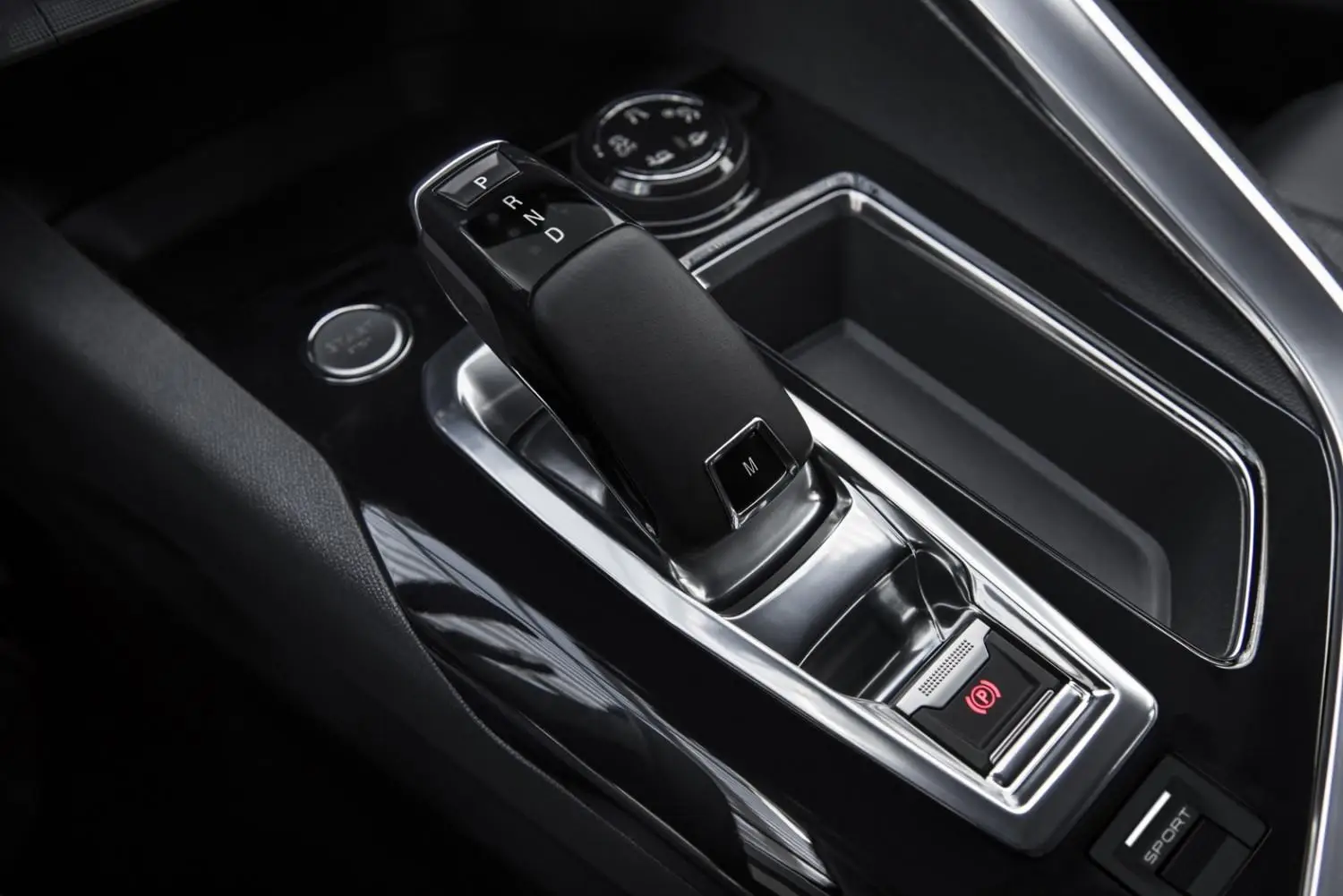
Peugeot automatic gearbox problems can range from occasional jerky gear changes to delayed engagement, slipping, warning messages and complete loss of drive. If your Peugeot does not change gears smoothly, it is important to identify the cause before agreeing to an expensive repair.
However, not every Peugeot automatic transmission works in the same way. Different models and generations have used EAT6 and EAT8 conventional automatic gearboxes, electrified dual-clutch systems such as e-DCS6, and older automated manual transmissions such as ETG and EGC. Each system has different operating characteristics and potential faults.
This guide explains the most common Peugeot automatic gearbox problems, the symptoms to look for, possible causes, diagnostic checks and advice for buying a used Peugeot automatic in the UK.
What Are the Most Common Peugeot Automatic Gearbox Problems?
Peugeot automatic transmission problems can produce several noticeable symptoms. Some develop gradually, while others appear suddenly with a dashboard warning.
The main symptoms to watch for include:
- Jerking or shuddering during gear changes.
- Delayed engagement when selecting Drive or Reverse.
- Slipping or unexpected increases in engine speed.
- Hesitation when accelerating.
- Harsh downshifts or sudden jolts.
- Difficulty selecting a gear.
- Unusual whining, grinding or humming noises.
- A gearbox fault message on the dashboard.
- The transmission becoming stuck in one gear.
- Reduced performance or loss of drive.
These symptoms do not automatically confirm that the complete gearbox has failed. For example, an electronic control problem, clutch issue, sensor fault or damaged engine mount can sometimes produce behaviour that feels like a transmission fault.
Consequently, the correct diagnosis should always come before replacing expensive gearbox components.
1. Peugeot Automatic Gearbox Jerking
Jerky gear changes are one of the symptoms that Peugeot owners may notice when a transmission is not operating as expected.
You might feel a sudden kick when accelerating, a pause between gears or an uncomfortable movement when pulling away in traffic.
Possible causes of jerky gear changes
The cause depends on the transmission fitted to the vehicle. Possible explanations include:
- Transmission software or calibration issues.
- Clutch wear in an applicable automated manual or dual-clutch system.
- Torque-converter or hydraulic-control problems in a conventional automatic.
- Incorrect clutch adaptation.
- Sensor or electrical faults.
- Worn engine or gearbox mounts.
- Internal transmission wear.
It is also important to distinguish between a fault and the normal behaviour of a particular gearbox. Some older automated manual transmissions do not provide the same seamless changes as a conventional torque-converter automatic.
What should you check?
First, identify when the jerking happens. Does it occur when the car is cold, after the transmission warms up, when moving away from a standstill or during a particular gear change?
Record the conditions and share them with a qualified technician. A road test and diagnostic scan can help establish whether the problem is mechanical, electronic or related to the transmission’s operating characteristics.
2. Delayed Engagement When Selecting Drive or Reverse
Another warning sign is a delay after selecting D or R.
For example, you may select Drive, but the car takes noticeably longer than usual to move. Similarly, Reverse may engage with a delay or a sudden jolt.
Possible causes include:
- Hydraulic pressure problems in a conventional automatic.
- Transmission-control or selector faults.
- Clutch operation or adaptation problems.
- Low or incorrect fluid where applicable.
- Internal wear or damage.
A brief change in engagement behaviour does not necessarily mean the gearbox needs replacing. Nevertheless, a new or worsening delay should be investigated.
Avoid repeatedly switching between Drive and Reverse in an attempt to make the vehicle engage. If the car is not selecting gears properly, arrange a professional inspection.
3. Peugeot Automatic Gearbox Slipping
Gearbox slipping occurs when the engine revs increase but the vehicle does not accelerate as expected.
You may notice that the engine sounds as though it is working harder, while the car struggles to gain speed.
Common warning signs
- Engine revs rise without a matching increase in road speed.
- Acceleration becomes inconsistent.
- The transmission struggles to maintain a gear.
- The vehicle hesitates under load.
- A burning smell develops.
- The car unexpectedly loses drive.
The possible cause depends on the gearbox design. Clutch wear may be relevant to an automated manual or dual-clutch transmission, while hydraulic pressure, torque-converter or internal clutch-pack problems may be considered on a conventional automatic.
Slipping should not be ignored. Continued operation may increase heat and internal wear, so arrange an inspection promptly.
4. Peugeot Automatic Gearbox Shuddering
Shuddering feels like a vibration or repeated judder while accelerating, moving slowly or changing gear.
It may be particularly noticeable in stop-start traffic, during gentle acceleration or when pulling away from a junction.
Potential causes include:
- Clutch-related problems.
- Torque-converter operation or wear.
- Transmission-fluid condition, where applicable.
- Engine or gearbox mounting problems.
- Software or adaptation issues.
- Other drivetrain faults.
Importantly, not every vibration comes from the gearbox. Engine misfires, worn mounts, driveshaft problems and other components can create similar sensations.
A technician should inspect the wider drivetrain rather than assuming that the transmission is responsible.
5. Peugeot Gearbox Warning Light or Fault Message
A gearbox warning light or message means the vehicle has detected a condition that requires attention. The exact meaning depends on the model, gearbox and warning displayed.
Possible areas requiring investigation include:
- Transmission sensors.
- Electronic control systems.
- Gear-selector operation.
- Electrical connections.
- Transmission temperature.
- Mechanical or hydraulic components.
What should you do when the warning appears?
- Read the exact dashboard message.
- Note whether the vehicle changes gear normally.
- Record any loss of power, unusual noises or sudden jolts.
- Check the relevant instructions in your vehicle handbook.
- Arrange a diagnostic inspection using suitable Peugeot-compatible equipment.
A diagnostic fault code is a starting point, not automatic proof that the named component needs replacing. The technician should interpret the code alongside the vehicle’s symptoms and test results.
For more dashboard alerts, read our Peugeot dashboard warning lights and meanings guide.
6. Peugeot Automatic Gearbox Stuck in One Gear or Limp Mode
Some Peugeot vehicles can enter a protective operating mode when the control system detects a transmission fault.
Depending on the model and fault, the gearbox may restrict the gears available, limit performance or prevent normal manual-mode operation.
For example, an older Peugeot 3008 handbook describes a gearbox back-up mode in which Drive is locked in third gear. It also instructs the driver to visit a Peugeot dealer or qualified workshop and gives a model-specific speed limit. This behaviour should not be assumed to apply to every Peugeot transmission.
The possible causes include:
- Transmission-control faults.
- Sensor or electrical problems.
- Hydraulic or mechanical faults.
- Gear-selector problems.
- Other vehicle-system faults affecting transmission operation.
If the vehicle enters limp mode, avoid hard acceleration and follow the warning instructions in the correct handbook. If there is a serious warning, loss of drive or unsafe behaviour, stop as soon as it is safe and seek assistance.
7. Peugeot EAT6 Automatic Gearbox Problems
The EAT6 is a six-speed automatic gearbox fitted to selected Peugeot models and engine combinations.
Peugeot handbooks identify it as a six-speed automatic transmission. The exact equipment depends on the model, generation, engine and market.
Possible symptoms that need investigation include:
- Harsh or delayed gear changes.
- Hesitation when selecting Drive.
- Unusual vibration or shuddering.
- Unexpected warning messages.
- Difficulty changing gears.
These symptoms do not establish that the EAT6 itself has a design defect. The cause could involve control electronics, fluid condition, hydraulic operation, mounts or internal components.
If your EAT6-equipped Peugeot develops a new or worsening symptom, ask a technician to identify the exact transmission variant and check its diagnostic history.
8. Peugeot EAT8 Automatic Gearbox Problems
The EAT8 is an eight-speed automatic transmission used in several Peugeot models and powertrains.
For example, Peugeot’s 3008 handbook describes the EAT8 selector positions and automatic driving mode. It also explains the gearbox warning and back-up operating mode for that particular vehicle documentation.
Potential symptoms to investigate include:
- Jerky gear changes.
- Delayed engagement.
- Hesitation at low speeds.
- Harsh downshifts.
- Warning messages.
- Unusual noises.
A gearbox warning does not necessarily mean the transmission needs a complete replacement. A technician should check fault codes, software status, electrical connections and relevant mechanical components before recommending major work.
9. Peugeot e-DCS6 and Hybrid Automatic Gearbox Problems
Newer Peugeot hybrid models may use the e-DCS6, a six-speed electrified dual-clutch transmission.
Peugeot’s manufacturer information explains that this system combines a dual-clutch gearbox with an electric motor, inverter and electronic control unit as part of its 48-volt hybrid powertrain.
That means the e-DCS6 is different from the conventional EAT6 and EAT8 systems.
If a hybrid Peugeot develops jerking, hesitation or a warning message, the diagnosis may involve the transmission, hybrid control system, electric motor or associated electronics.
Do not assume that advice for an older EAT8 gearbox automatically applies to an e-DCS6-equipped vehicle. The correct diagnostic procedure must be selected for the exact powertrain.
10. Older Peugeot ETG and EGC Automated Manual Gearbox Problems
Some older Peugeot models used automated manual transmissions, including ETG and EGC versions.
These systems are different from conventional automatic gearboxes. They use a manual transmission arrangement with automated clutch and gear-selection operation.
As a result, their gear changes can feel less smooth than those of a traditional torque-converter automatic.
Drivers may notice:
- A pause between gear changes.
- A noticeable movement during upshifts.
- Hesitation when pulling away.
- Jerking in slow-moving traffic.
Some of these characteristics can be related to the transmission’s design. However, excessive juddering, repeated warnings, clutch slipping, unusual noises or failure to select a gear should be checked.
This distinction is especially important when buying an older Peugeot 208 or 2008 advertised simply as an automatic.
For more model-specific information, see our Peugeot 2008 problems and reliability guide.
Peugeot Automatic Gearbox Oil and Fluid Problems
Transmission fluid is important in systems that use it, but maintenance requirements vary between gearbox designs.
Never assume that every Peugeot automatic uses the same fluid, checking procedure or service interval.
The correct specification and maintenance instructions should be confirmed using the vehicle’s VIN, exact gearbox identification and manufacturer information.
A technician may need to inspect fluid condition or level where the design and procedure allow it. Incorrect fluid or an unsuitable service procedure can cause problems.
Equally, do not rely on a generic online recommendation to change every Peugeot automatic gearbox fluid at the same mileage. Ask a qualified Peugeot transmission specialist to confirm what is appropriate for your specific vehicle.
For general ownership maintenance information, see our Peugeot service cost and maintenance guide.
How to Diagnose Peugeot Automatic Gearbox Problems
Correct diagnosis can prevent unnecessary parts replacement and help identify the actual cause.
A qualified technician may carry out the following checks.
1. Identify the exact gearbox
Confirm the model, generation, engine, registration period and gearbox type. Use the VIN or manufacturer documentation where necessary.
2. Carry out a road test
If the vehicle is safe to drive, a technician can try to reproduce the problem under controlled conditions. They may check whether it happens when cold, when warm, during acceleration or while manoeuvring.
3. Read diagnostic fault codes
Use suitable diagnostic equipment to retrieve relevant transmission and vehicle-system codes. Interpret the results rather than replacing a component based on one code alone.
4. Inspect electrical connections and sensors
Check relevant wiring, connectors, sensors and control modules for faults or communication problems.
5. Check fluid and mechanical condition where applicable
Follow the correct procedure for the identified gearbox. Inspect relevant fluid, seals, mounts and other components as appropriate.
6. Check software and adaptation
Where the transmission uses electronic adaptation or software-controlled operation, confirm whether the relevant updates and procedures have been carried out.
7. Investigate internal damage if necessary
Only after suitable external, electronic and hydraulic checks should internal transmission damage be considered and a major repair recommended.
Ask for a written diagnosis that explains the fault, the tests performed and the proposed repair.
How Much Does Peugeot Automatic Gearbox Repair Cost in the UK?
There is no single repair price for Peugeot automatic gearbox problems.
The final cost depends on:
- The Peugeot model and year.
- The exact gearbox type.
- The fault and its severity.
- Parts and labour required.
- Whether the gearbox needs removal.
- Whether a component can be repaired or must be replaced.
- The repairer’s location and warranty terms.
A diagnostic or electrical repair is not comparable with a clutch, torque-converter or internal gearbox repair. Therefore, a single online average can be misleading.
Before approving expensive work, ask the garage for:
- The diagnostic findings.
- The exact failed component, if identified.
- A breakdown of parts and labour.
- Whether repair or replacement is being recommended.
- The warranty on the repair.
- Whether the quotation includes VAT.
If the car is still covered by a manufacturer or extended warranty, check the applicable terms before authorising work.
When Should You Stop Driving a Peugeot With Gearbox Problems?
Some minor symptoms may allow a cautious journey to a repairer, but serious transmission problems can make the vehicle unsafe.
Stop as soon as it is safe and seek professional assistance if you experience:
- Complete loss of drive.
- Severe slipping.
- A strong burning smell.
- A major fluid leak.
- Serious grinding or mechanical noises.
- A red or stop warning instructing you to stop.
- Sudden inability to select gears.
- Dangerous or unpredictable vehicle behaviour.
Do not continue driving simply because the car can still move. Follow the instructions in the handbook for your exact model. If you are unsure whether the vehicle is safe, arrange recovery.
How to Prevent Peugeot Automatic Gearbox Problems
Not every transmission fault can be prevented. Nevertheless, sensible maintenance and early investigation can help reduce avoidable damage.
Follow the correct maintenance schedule
Use the service schedule for your exact engine and gearbox. Do not rely on a generic interval for every Peugeot model.
Use the specified transmission fluid
Where fluid servicing is applicable, confirm the correct specification and procedure before work begins.
Respond to new symptoms early
A sudden change in shift quality, unusual noise or warning message deserves attention. Early diagnosis may prevent a smaller issue from developing into a more serious one.
Avoid aggressive operation when a fault is present
If the gearbox is slipping, overheating or behaving unpredictably, avoid hard acceleration, towing and unnecessary journeys until it has been inspected.
Keep repair and servicing records
Retain invoices, diagnostic reports and details of previous gearbox work. These records are useful for future diagnosis and when selling the vehicle.
Peugeot Automatic Gearbox Problems: Used-Car Buying Checklist
If you are considering a used Peugeot automatic, inspect the gearbox as carefully as the engine and bodywork.
Before the test drive
Check:
- The exact gearbox type.
- Service and maintenance records.
- Previous transmission repairs.
- Dashboard warning messages.
- The vehicle’s mileage and ownership history.
- MOT history and outstanding recall information.
During the test drive
If the vehicle is safe to operate, check:
- Whether Drive and Reverse engage normally.
- Whether gear changes feel consistent.
- Whether there is excessive hesitation.
- Whether the gearbox slips or shudders.
- Whether unusual noises appear.
- Whether warning messages return.
Test the car at low speeds as well as on a faster road, because some symptoms are easier to notice during parking and stop-start driving.
Before buying
Consider an independent inspection by a technician familiar with the particular Peugeot gearbox.
You can also use the official GOV.UK vehicle recall checker and Peugeot’s recall campaign checker. A recall check is important, but it does not replace a mechanical inspection.
Are Peugeot Automatic Gearboxes Reliable?
There is no single answer that applies to every Peugeot automatic gearbox.
The EAT6, EAT8, e-DCS6 and older ETG or EGC systems have different designs and operating characteristics. Their condition also depends on the vehicle’s age, mileage, maintenance, driving history and previous repairs.
A used Peugeot with a documented service history and a healthy transmission may be a better purchase than a newer vehicle with unexplained warning messages or poor maintenance records.
Rather than judging reliability by the Peugeot badge alone, identify the gearbox fitted to the specific car and check its condition carefully.
Final Verdict: Peugeot Automatic Gearbox Problems
Peugeot automatic gearbox problems can involve jerky gear changes, delayed engagement, slipping, shuddering, warning messages or difficulty selecting gears. However, these symptoms do not automatically mean that the complete transmission has failed.
The most important step is to identify the exact gearbox. EAT6 and EAT8 conventional automatics, e-DCS6 hybrid dual-clutch systems and older ETG or EGC automated manuals require different diagnostic approaches.
If your Peugeot develops a new transmission symptom, record what happens and arrange a suitable inspection. Follow the handbook’s safety instructions, especially if a serious warning appears or the vehicle loses drive.
For used-car buyers, a proper test drive, verified maintenance history, recall check and independent inspection are sensible ways to reduce the risk of an expensive surprise.
Frequently Asked Questions About Peugeot Automatic Gearbox Problems
1. What are the most common Peugeot automatic gearbox problems?
Symptoms that may indicate a problem include jerky gear changes, delayed engagement, slipping, shuddering, warning messages, unusual noises and difficulty selecting gears. The cause depends on the gearbox fitted to the vehicle.
2. Why is my Peugeot automatic gearbox jerking?
Possible causes include software or adaptation issues, clutch wear on applicable systems, sensor faults, hydraulic problems, worn mounts or internal transmission wear. A diagnostic inspection is needed to identify the cause.
3. Is the Peugeot EAT8 gearbox reliable?
The EAT8 is an eight-speed automatic used in selected Peugeot models. Its condition depends on the exact vehicle, maintenance and previous use. A symptom should be investigated rather than assuming that every EAT8 has the same fault.
4. What is the difference between Peugeot EAT8 and e-DCS6?
The EAT8 is an eight-speed automatic transmission. The e-DCS6 is a six-speed electrified dual-clutch transmission used with certain 48-volt hybrid powertrains. They have different designs and should not be diagnosed using identical assumptions.
5. Can I drive my Peugeot if the gearbox warning light comes on?
Follow the exact warning displayed and the instructions in your vehicle handbook. Some warnings require a cautious visit to a workshop, while more serious warnings instruct the driver to stop as soon as it is safe. Do not ignore a loss of drive or unsafe behaviour.
6. Why does my Peugeot hesitate when selecting Drive or Reverse?
Possible causes include selector or electronic faults, hydraulic pressure issues, clutch operation or internal wear. A new or worsening delay should be checked by a qualified technician.
7. Do Peugeot automatic gearboxes need an oil change?
Maintenance requirements depend on the exact gearbox and manufacturer procedure. Confirm the correct fluid specification and servicing instructions for your vehicle rather than applying a universal mileage interval.
8. Are older Peugeot ETG gearboxes the same as EAT6 or EAT8?
No. ETG and EGC systems are automated manual transmissions, whereas EAT6 and EAT8 are conventional automatic gearboxes. Their driving characteristics and potential repair requirements are different.
9. How much does Peugeot automatic gearbox repair cost?
The price depends on the gearbox, fault, parts and labour required. A diagnostic or electrical repair may cost much less than internal transmission work or replacement. Request a written diagnosis and quotation before approving a major repair.
10. How can I check a used Peugeot automatic before buying?
Confirm the gearbox type, review service and repair records, test Drive and Reverse, check for juddering or slipping, inspect dashboard warnings and consider an independent inspection. Also check for outstanding safety recalls using official services.